Case study
Futurenav Brand
Brand and creative strategy for ETS's first enterprise skills-intelligence platform
6 core assessments
3 audience systems
2 global registered trademark names
Futurenav Demo Video 2:30
Background
THE FUTURE OF WORK IS...?
ETS, a company formed to run the SATs, has spent 75 years building the science behind GRE, TOEFL, and TOEIC, measuring what people know for admission into education, and eventually, the workfoce. Futurenav is ETS's first major move into skills: what someone is able to do, for the sake of employment. It's an enterprise talent platform built for talent managers and the people they manage, launched into a workforce being reshaped by AI faster than most talent systems can track.
Situation
Skills are hard to PROVE
Résumés list job titles don't show capability. Most talent-intelligence platforms answer that with more AI: black-box scoring that talent teams are increasingly required to explain and defend. ETS was entering a category with entrenched competitors and none of their head start, with seventy-five years of defensible measurement science.
Opportunity
Turn research into hope
The brief carried two jobs. It had to make Futurenav's science visible, so it could compete against AI-native platforms with more polish and less rigor. It also had to speak to something more personal: the real uncertainty of a job market being rewritten by AI, and it had to do that with optimism.
Approach
EVERY FINGERPRINT IS UNIQUE
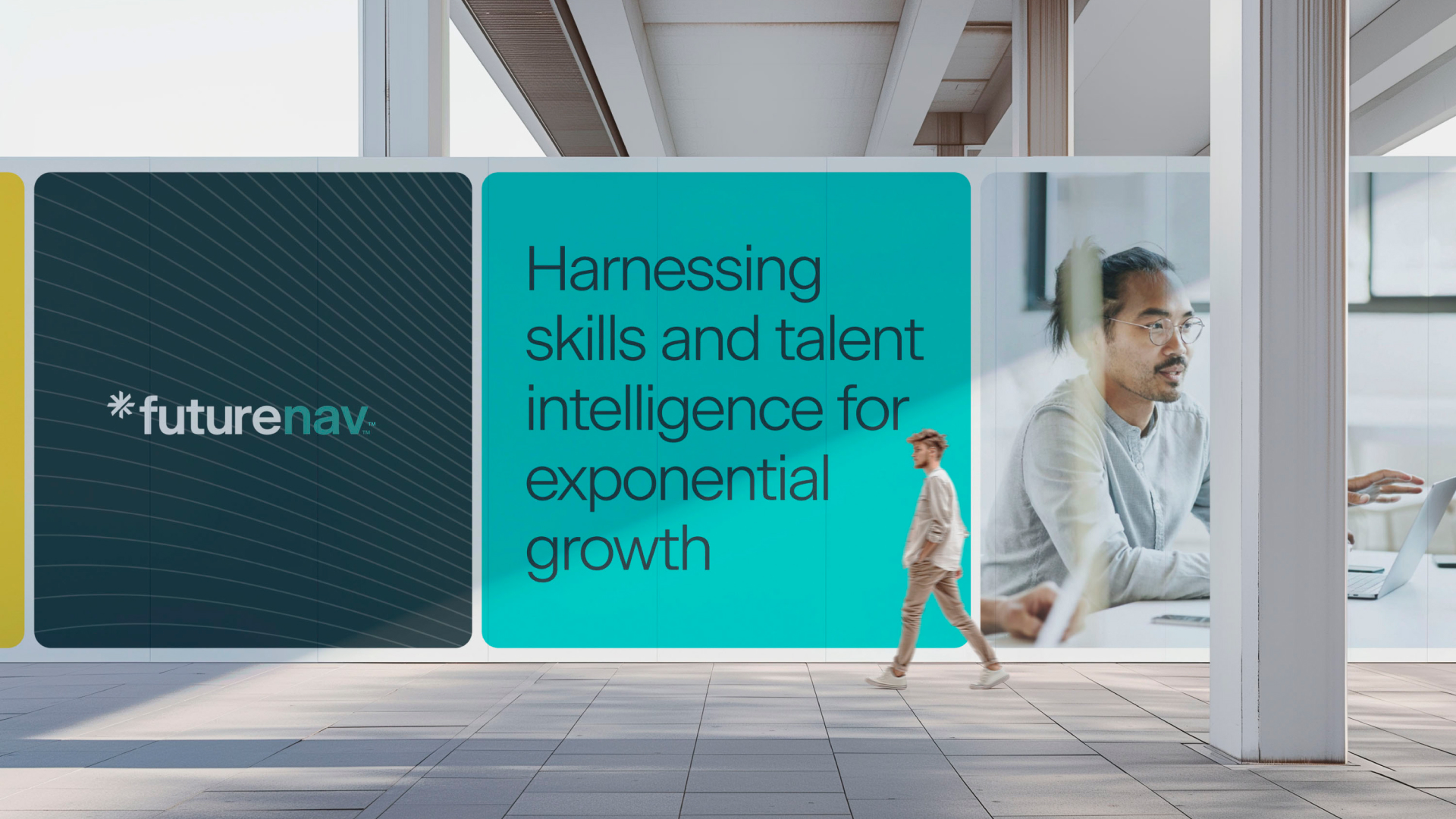
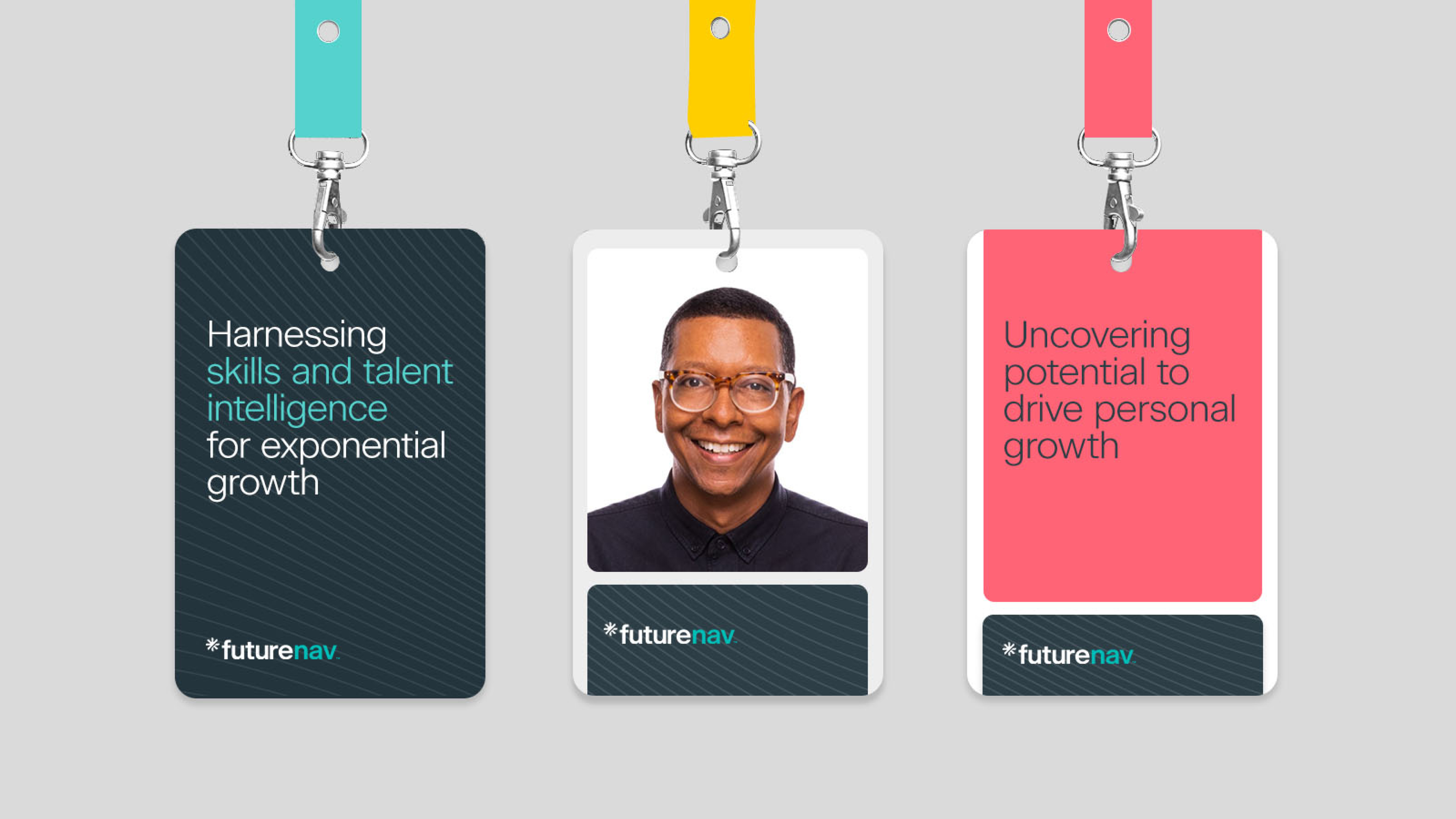
The center of the system is the Skillprint: a set of lines representing an individual's unique combination of strengths. More dense and teal for professionals with an established skill history, or more open and warmer as yellow, then watermelon through higher education and K-12, the graphic system is adaptable and exapnsive of the whole education-work journey. Futurenav and Skillprint were both taken through the full trademark registration process globally, giving ETS an ownable vocabulary.
The optimism of the name itself works like a compass: "nav" set apart in teal inside "futurenav," an arrow-based sub-brand structure (Edge, Signal, Adapt AI, Presence, Anywhere) that turns product hierarchy into forward motion, and kinetic type that pans through moving skill-lines.
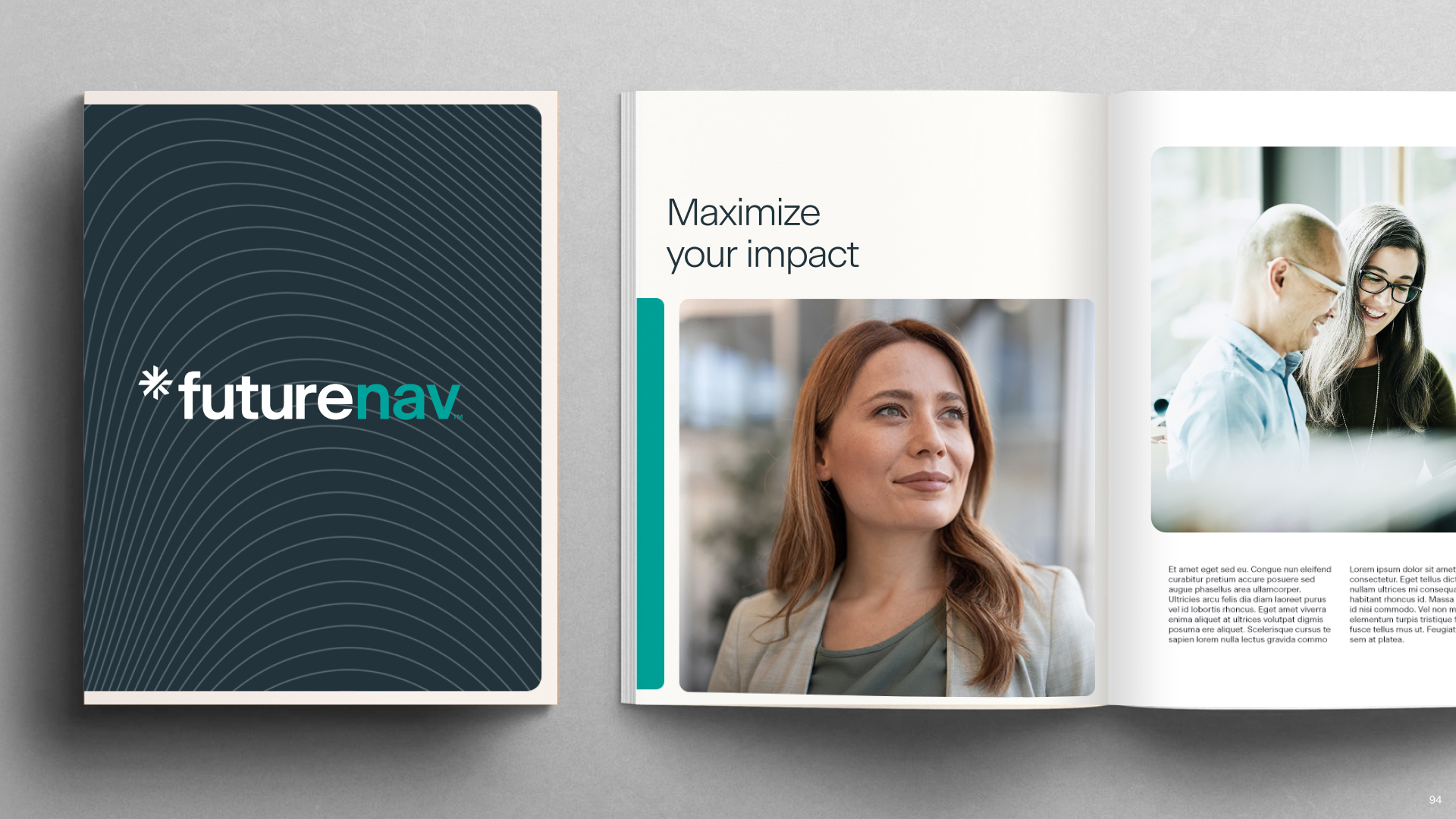
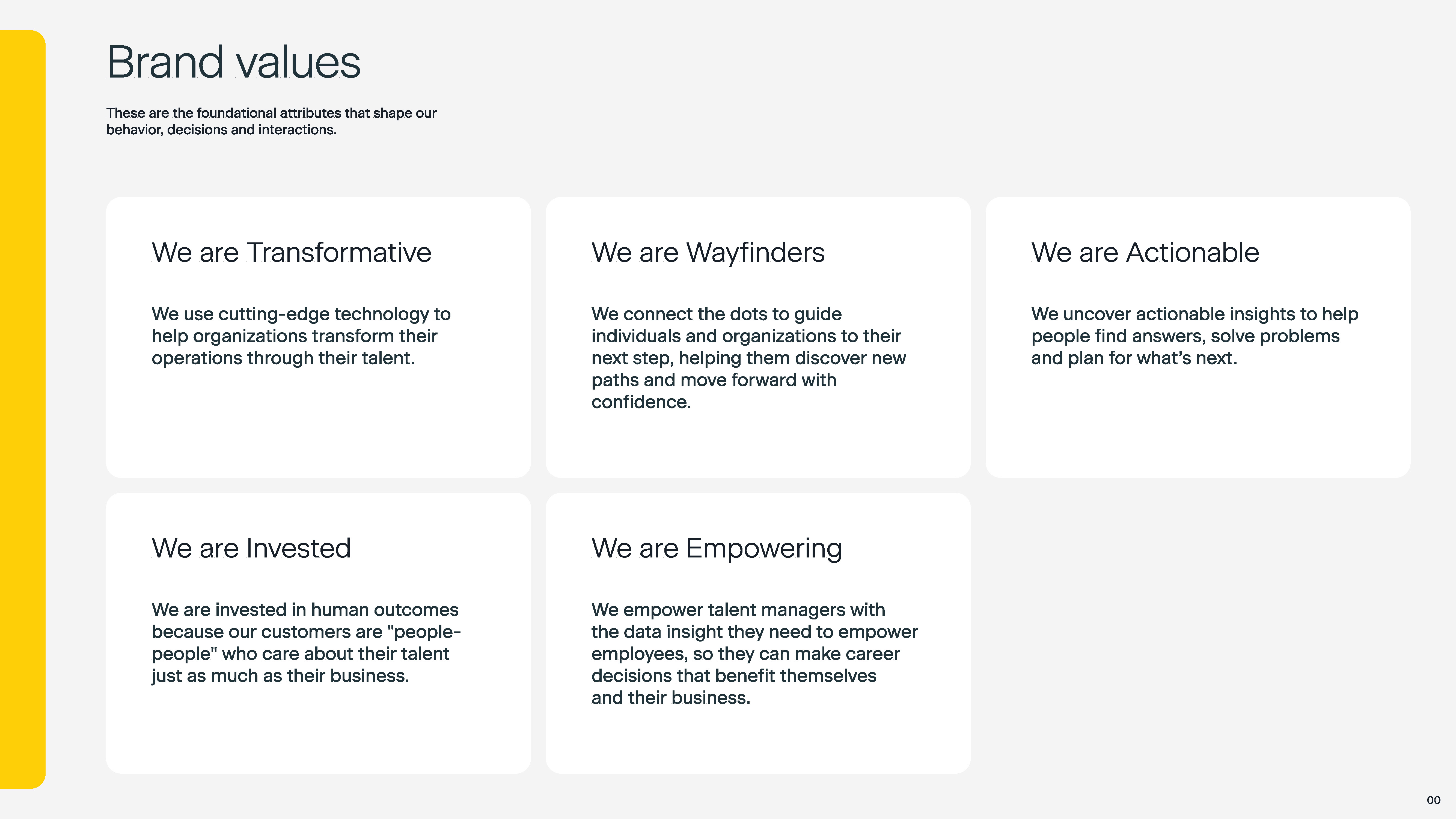
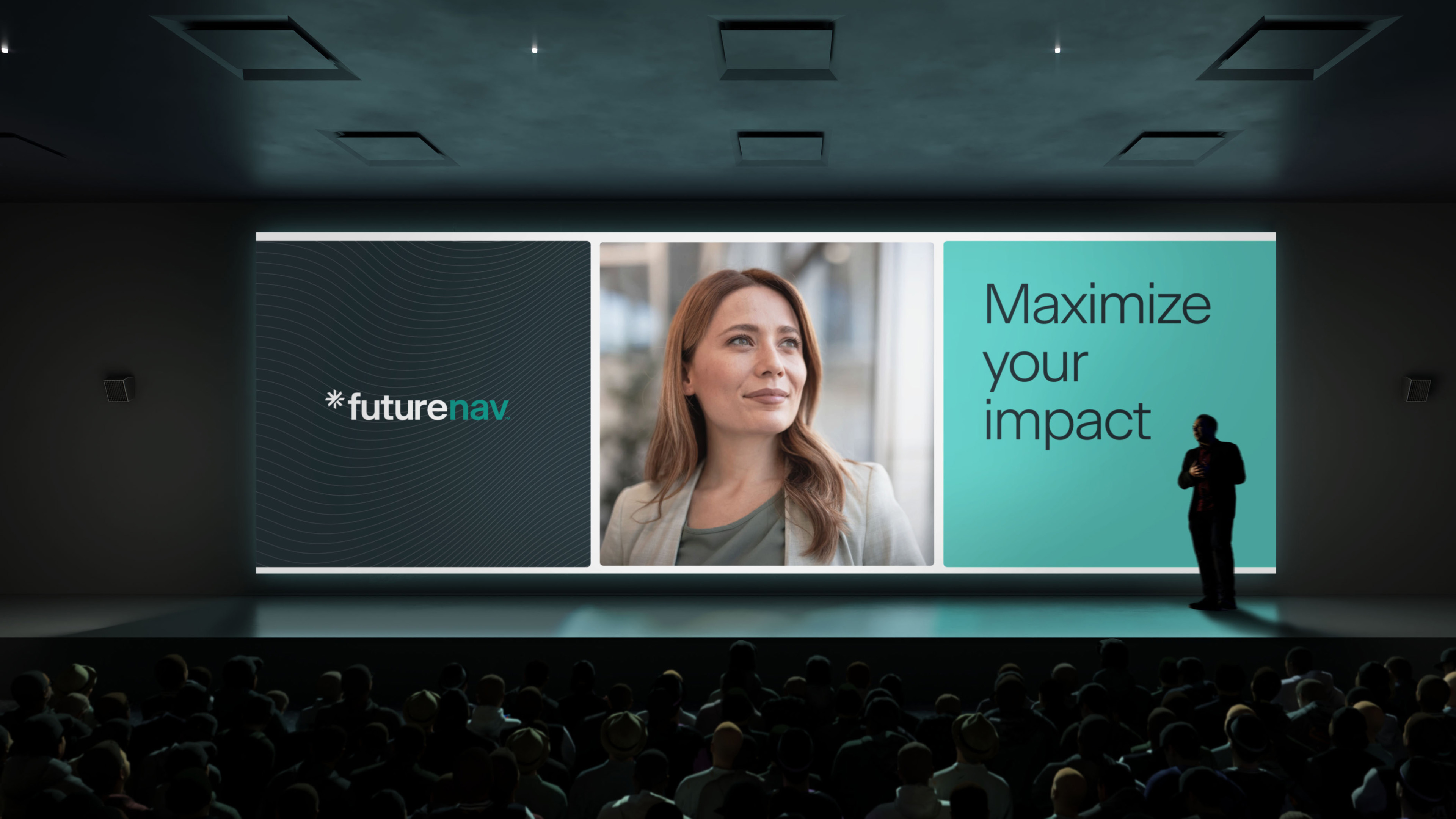
Tone of voice is confident and mentor-like, with explicit word rules that keep language like "solution" and "talent" consistent across every piece of copy. Photography stayed warm, candid, and human, so the platform reads like a guide standing next to someone.

Summary
THE GPS OF TALENT
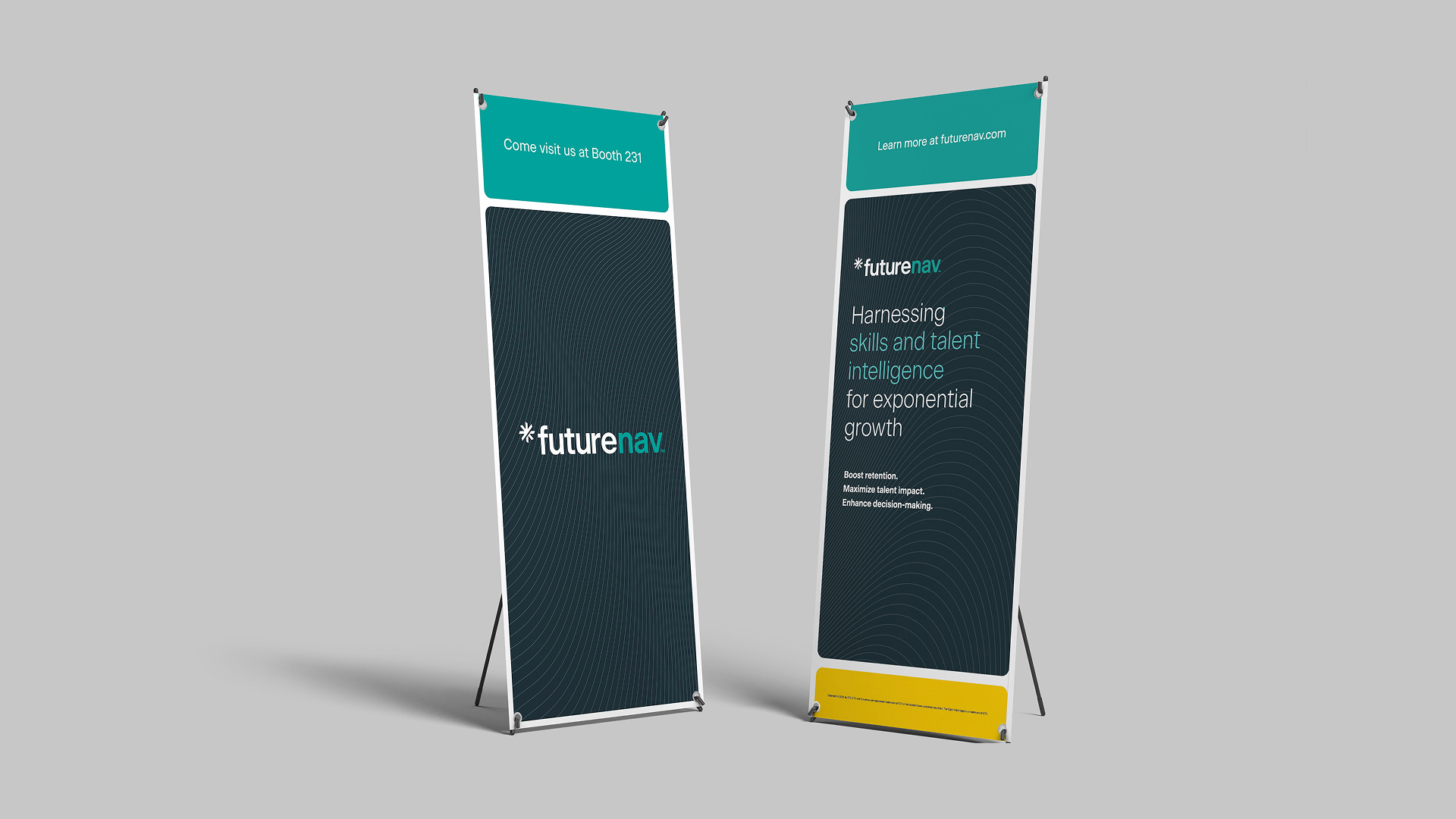
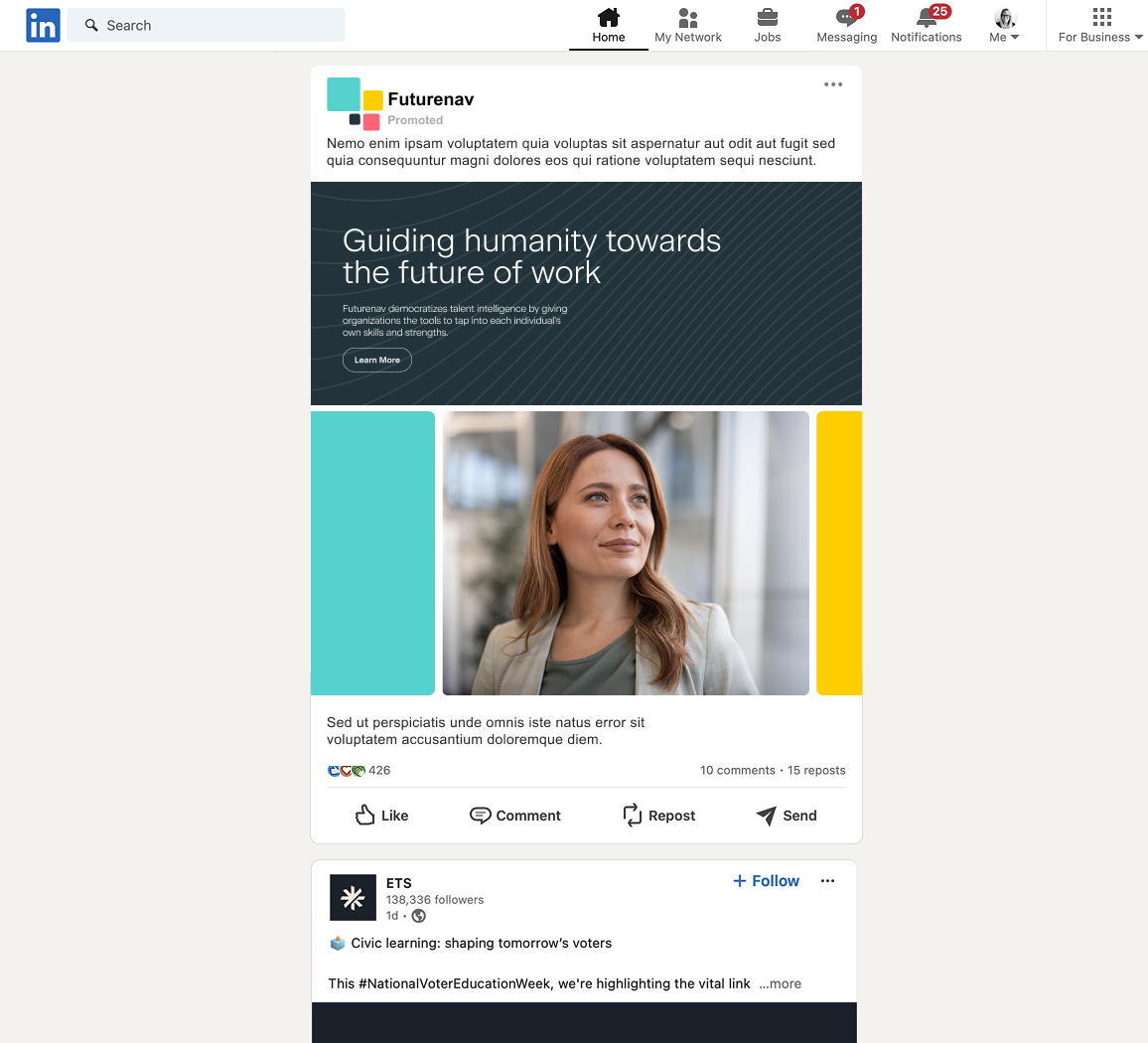
Futurenav gave ETS a named, trademarked, and visually distinct entry point into enterprise skills intelligence. The identity makes the underlying science legible on sight, and it reads as optimistic and human to the people it's actually measuring. It now anchors the platform's product UI, sales and marketing collateral, and market presence at futurenav.com, and set the template ETS's product sub-brands build on as the platform expands.