Case study
2026 ETS Human Progress Report
Creative platform for ETS’s flagship global report on work, learning and AI
18 countries
4 shapes of adaptability
683 media mentions
Background
WHAT DOES ADAPTABILITY LOOK LIKE?
Every year, the ETS Human Progress Report asks workers around the world what they need to get ahead and what stands in their way. The answers become the Human Progress Index and a roadmap for employers, educators and policymakers. In 2026 the survey reached its largest audience yet, with a U.S. oversample big enough to report state by state. It landed in a workforce where people expect half of all work to involve AI within two years.
Situation
Change won’t stop moving
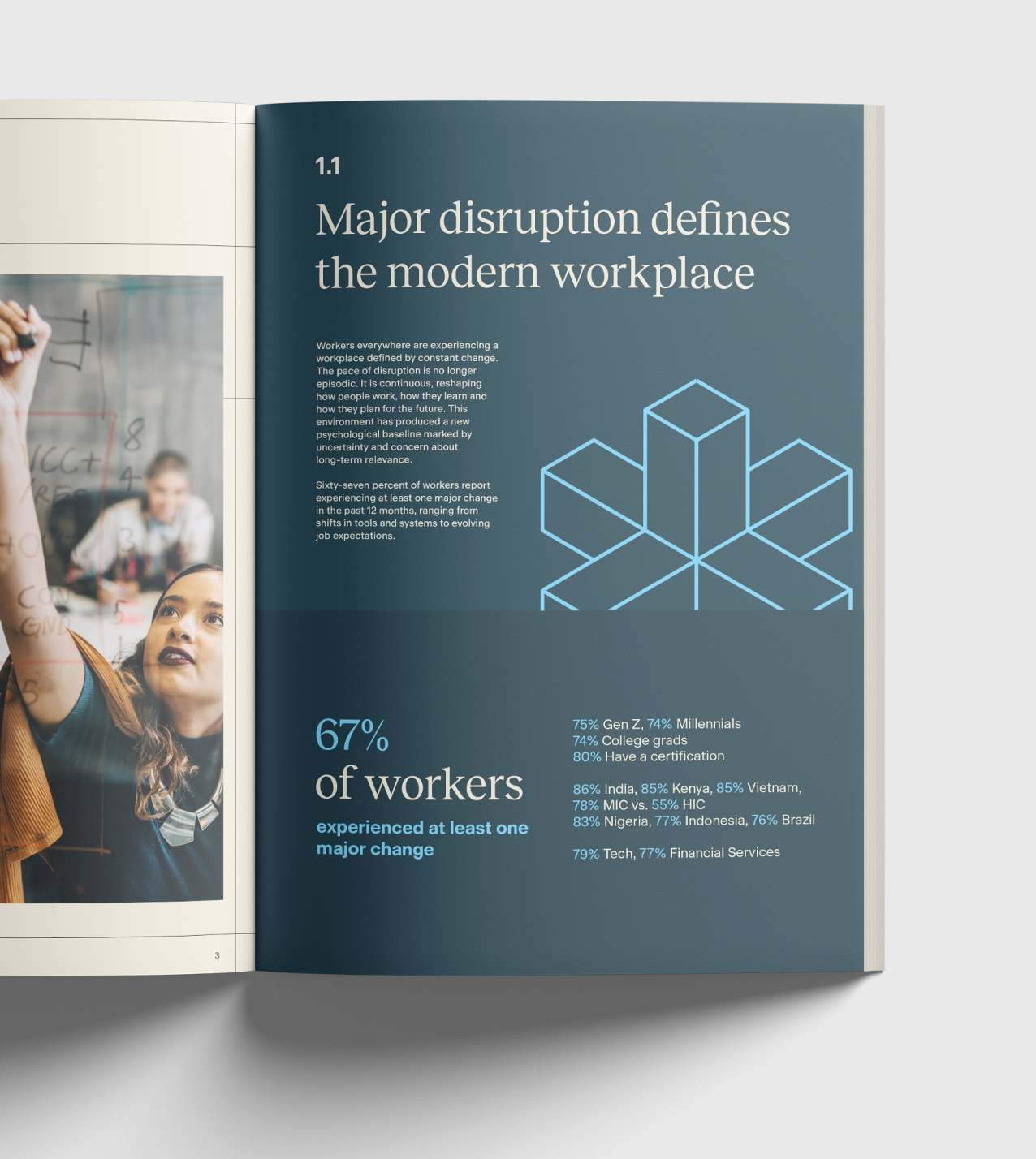
The data showed people shifting from job security to constant adaptation. 77% said job security now depends on continuous evolution, and most were already building new skills. But 71% couldn’t picture the future jobs they were preparing for. AI literacy had the widest skills gap of all: 19 points between how important workers rated it and how proficient they felt. “Adaptability” is a word every future-of-work report uses. It’s abstract, hard to picture and easy to forget.
Opportunity
Make adaptability ownable
The brief was to turn adaptability into a concept only ETS could own: to make the invisible visible and measurable, and to put ETS at the center of the conversation. The insight was that adaptability is the antidote to AI fear. People can’t stop the workplace from changing, but they can be given the words to talk about what they’re living through. For a company that has spent 75 years measuring language and learning, that pointed to one idea: a new language.
Approach
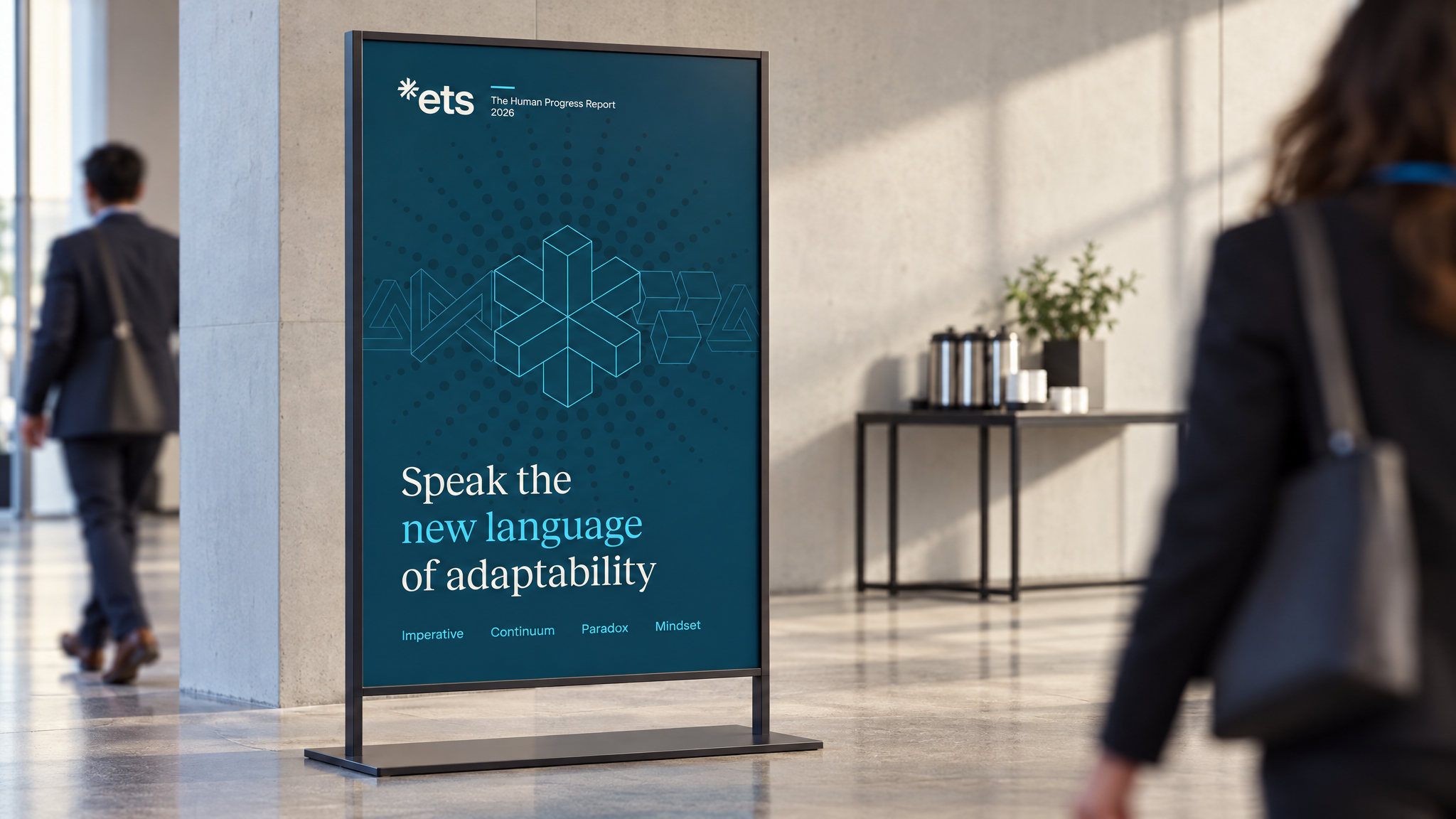
SPEAK THE NEW LANGUAGE OF ADAPTABILITY
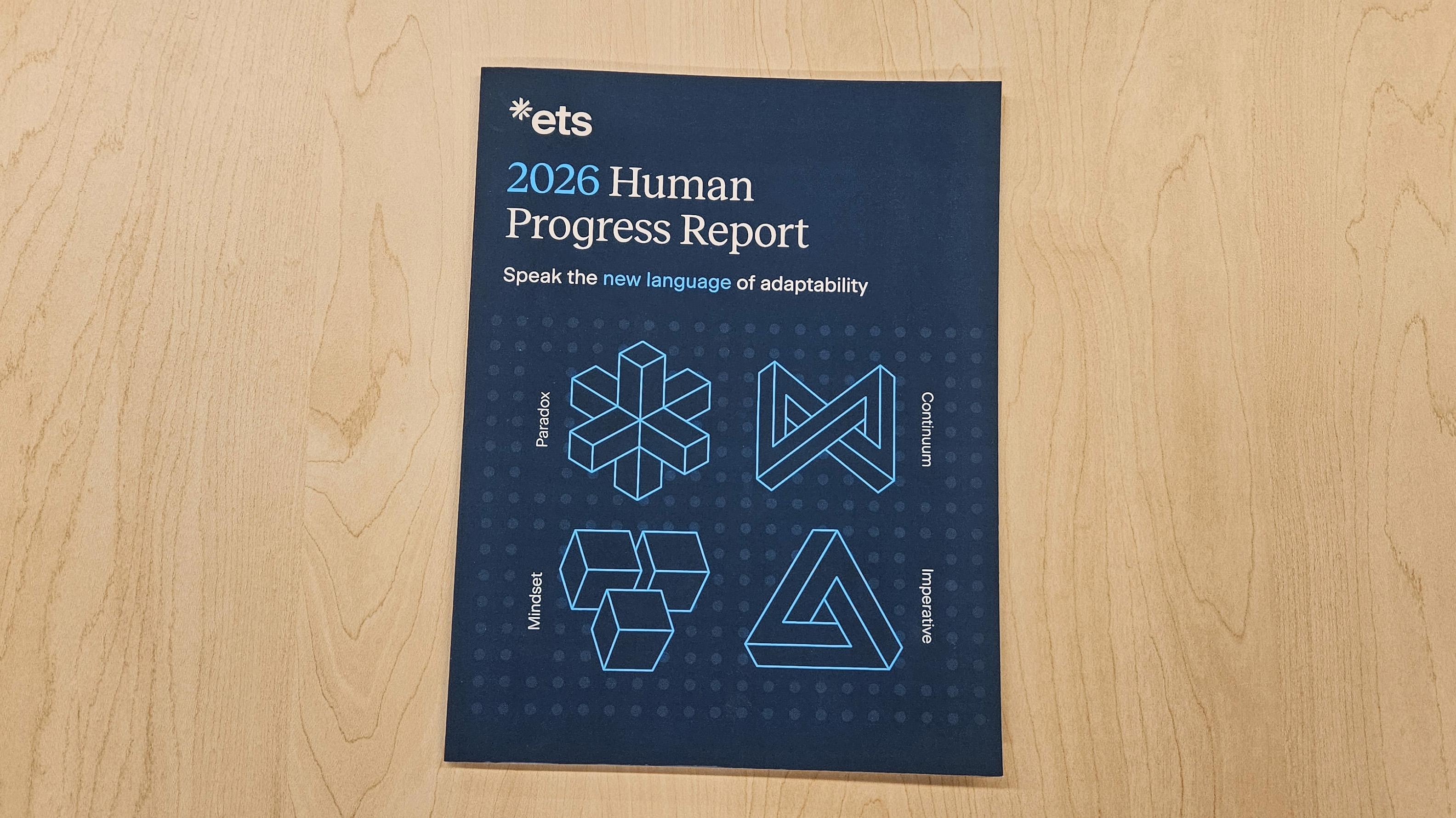
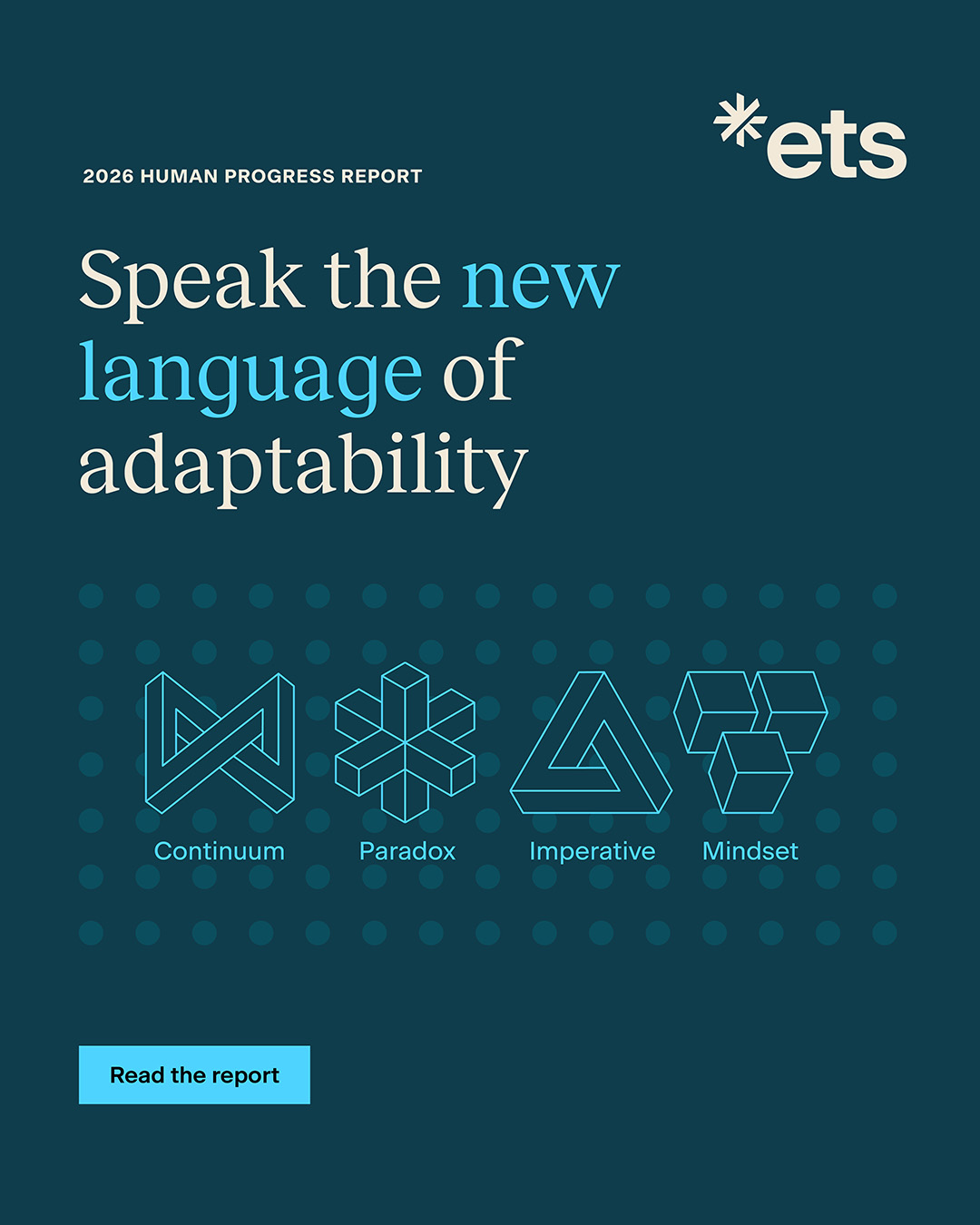
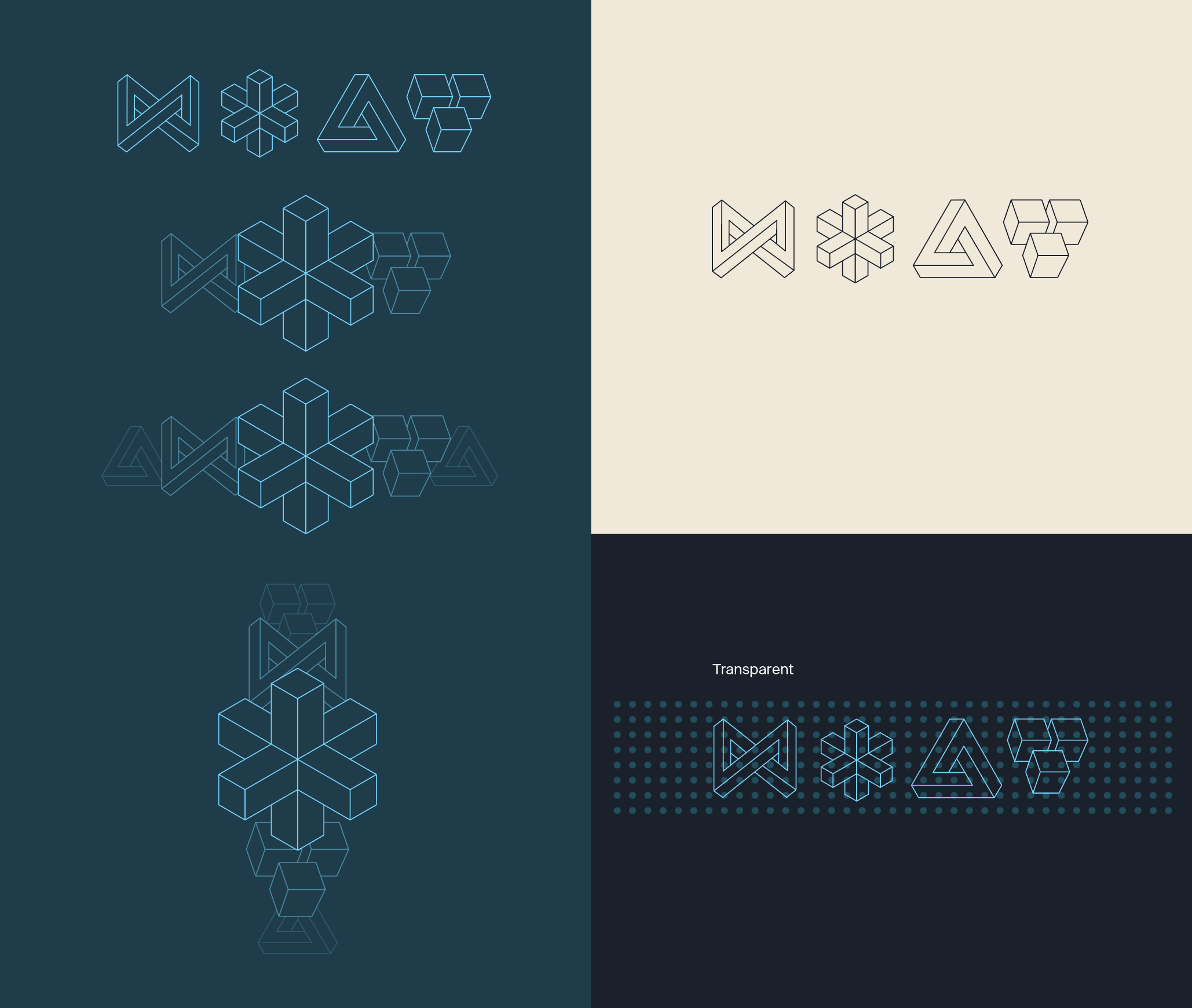
The platform draws on a century of impossible geometry: Escher, Penrose and the visual paradoxes that have long helped explain how the world behaves. From one shared grid of dots we built four shapes, each tied to a finding in the report:
Continuum: a spectrum of individual differences
Paradox: building skills for jobs you can’t yet picture
Imperative: staying relevant is no longer optional
Mindset: overwhelmed by change, or energized by it
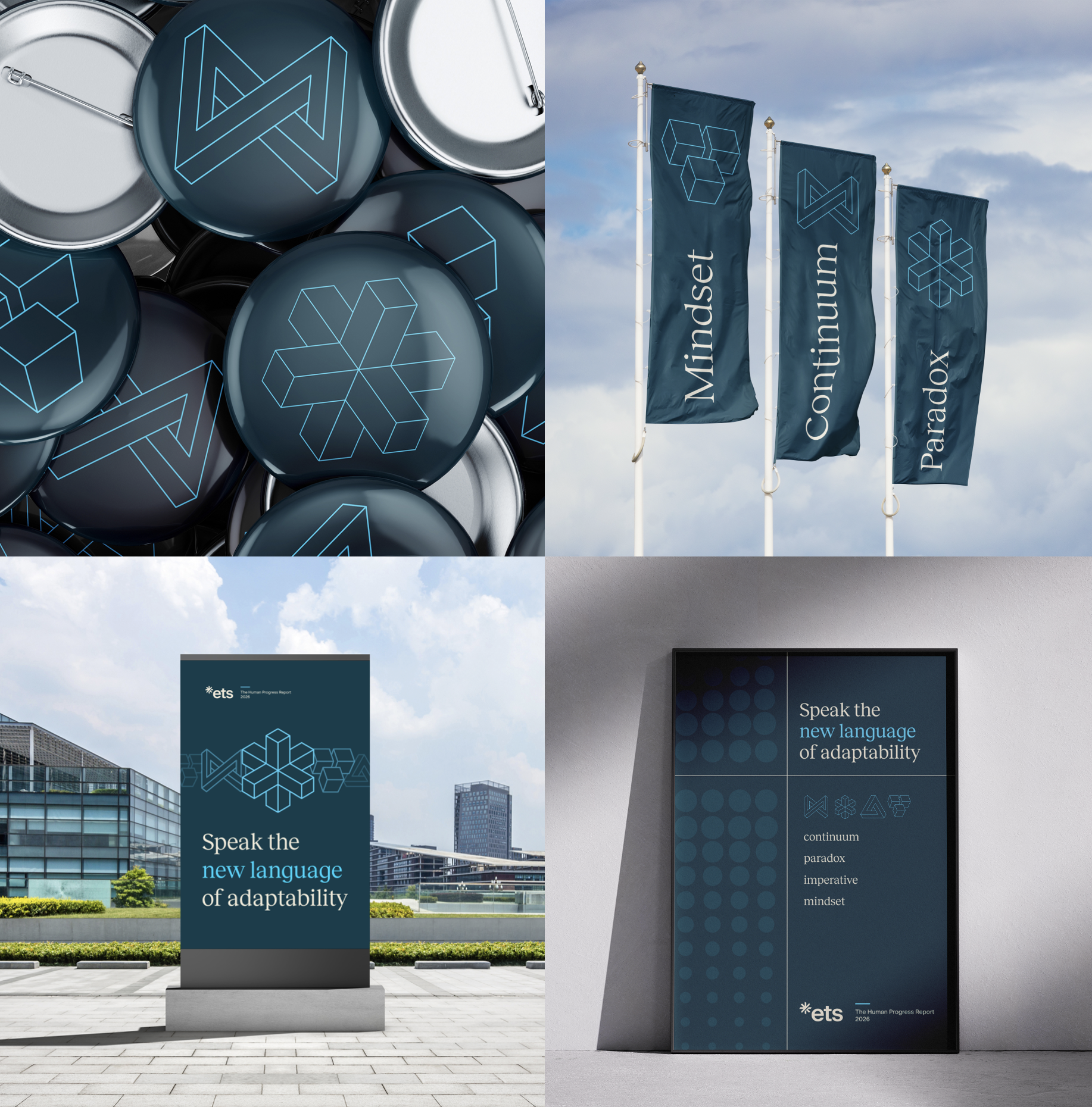
Together they work as an iconographic vocabulary, a visual code with ETS DNA. The four words became the eyebrow on every piece, and “Speak the new language of adaptability” became the line that ties them together.
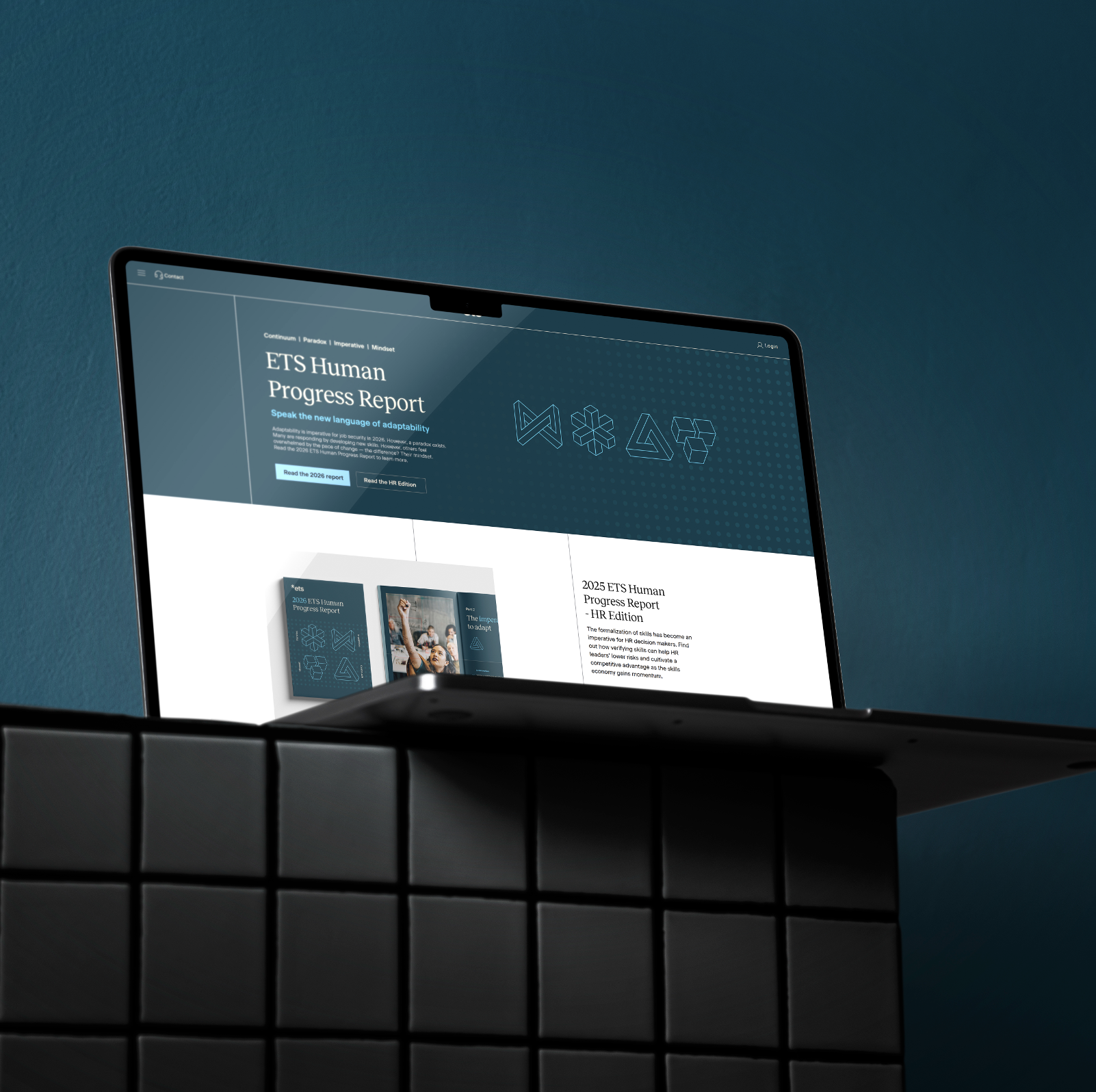
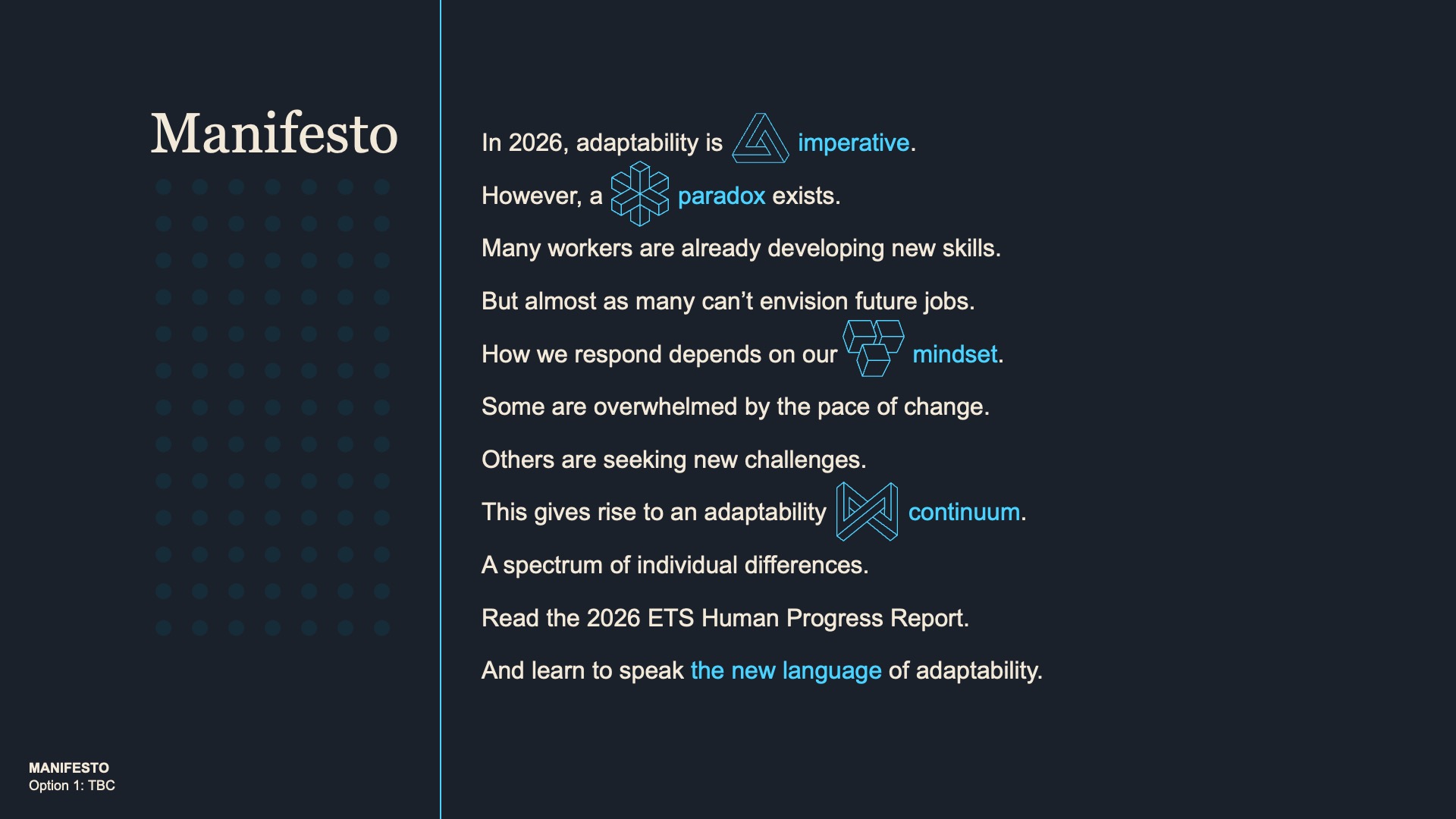
A manifesto set the tone: clear-eyed about the paradox, hopeful about the mindset. The same grid of dots became a globe in motion, data visualizations, and the cover itself. The language went everywhere the report went: cover, landing page, social, email, a 15-second video and executive thought leadership. It also picked up local accents as it spread into country reports (UK, India and others), a U.S. 50 States Edition with state-level cuts, and an ETS Solutions Advisory campaign.

Summary
THE MOST ENGAGED REPORT YET
The 2026 report was the most engaged Human Progress Report to date. It earned 683 media mentions (up from 45 in 2025), 374K earned media views (up from 168K), 30 executive interviews and coverage in Forbes. 122 target (ABM) accounts engaged, up from 40, including the World Bank, the U.S. Department of Education, the Philippines Department of Education, the Welsh Government and the Government of Ontario. Form submissions rose to 839 from 616. The platform gave ETS a visual language for adaptability that it owns, and a system it can keep extending into state, country and solutions-led reports.